|
Welcome to the CALIFORNIA
PROTEA ASSOCIATION
An association for growers of exotic Protea
flowers and foliages

|
|

|
Protea Cut flower care for consumers
For maximum vase life, care for these exotic blooms as follows: Cut about
1/4 inch from the end of the stem, strip all leaves which would be below the
surface of the water and place it in a vase with water and approximately 1/4
teaspoon of household bleach per quart of water as soon as you get them
home. The bleach will prevent the growth of algae in the water which will
clog the water channels in the stem. If you repeat this at 4 to 5 day
intervals and keep them out of the direct sunlight they will keep their
fresh look much longer.
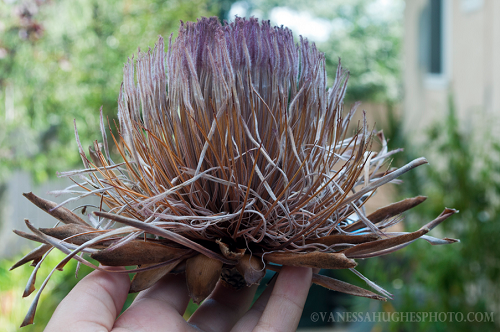
DON'T THROW THEM AWAY Most Protea
will dry without shedding leaves or petals. They will take a different form
which may be readily used in dried flower arrangements which will last for
many years. Some of the color will remain but mostly they will go to tan
shades. When the blooms have reached the end of their fresh life just remove
the water and put them in an out of the way place for about three weeks. You
may stand them in a bucket or vase or hang them upside down, but don't lay
them on a flat surface or in a pile or they will assume an unnatural shape.
You may remove the leaves or keep them on to attain the desired effect. You
will then have dried flowers which can be arranged with other dried
materials to create unusual and attractive decorations for your home.
We have an instructional book for sale to help you grow and care for
your protea:
Protea Book for Sale
PLANTING YOUR NEW PROTEA PLANTS
| Where? |
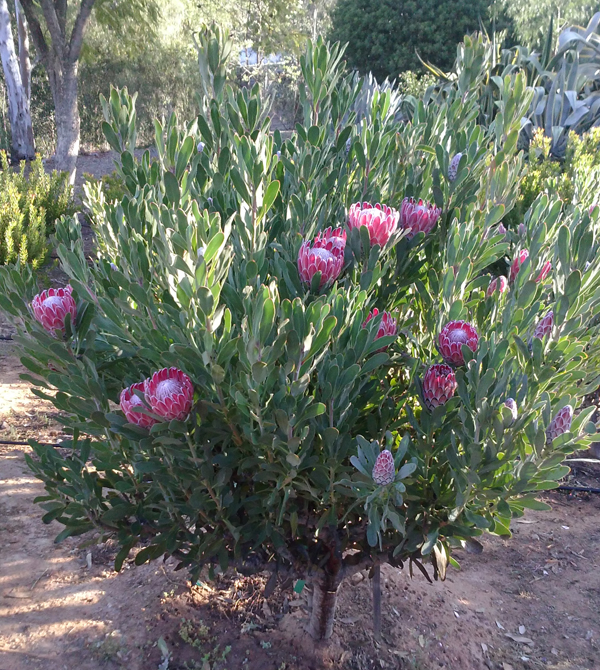
Proteas can be grown in climate zones as defined in
Sunset Garden Book 21, 22 and 23 are generally acceptable except for
cold spots in low lying areas. For zones 19, 20 and 21 plant on high
ground only. Protea can survive for two (2) hours down to 28 degrees
F. with minor new leaf damage. Ideally Proteas thrive in
well-drained soil such as decomposed granite, in full sun with good
air circulation. Do not plant them in areas, which have been
fertilized with phosphorous or old grove areas contaminated with
Phytopthera Cinnamoni. Generally speaking, avoid planting them with
other garden flowers, which need continuous damp soil and
phosphorous bearing fertilizers. Virgin soil with native brush in
place is ideal.
|
| When? |
Generally it is best to plant in the fall and
winter from November through February.
|
| How? |
Obtain plants in one (1) gallon cans, dig a hole
three (3) times the can diameter and three (3) times the depth.
Space the Protea plants about six (6) feet apart, Banksias six (6)
to ten (10) feet apart depending on the mature size of the plant.
Avoid holes with rock bottoms, drainage is vital. Fill the hole with
water and let it soak in. Back fill the hole raking in any rotted
vegetable matter around the hole and place the plant with the
original soil level even or a little above the surrounding soil
level. Tamp the soil down with your hand and add more water to the
area around the plant.
|
| Water |
Proteas like to have wet-dry cycles so set them up
with a drip system and water them once a week with approximately one
(1) gallon of water each week during cool months and more during the
hot, summer months. One (1) dripper about two (2) inches from the
stem will be adequate until the plants mature, then add a dripper on
each side about six (6) inches from the stem and remove the original
dripper. One (1) gallon per hour drippers are generally used.
|
| Fertilizer |
It is best not to fertilize Proteas as they have
evolved in poor nutrient areas. DO NOT apply any fertilizer with
phosphorous or ammonium nitrate type fertilizer. If you feel a vital
need to fertilize, use a small amount of ammonium sulphate dissolved
in water.
|
We have an instructional book for sale to help you grow and care for
your protea:
Protea Book for Sale
PROTEA PLANT PRUNING

|
Copyright © 1998 -
,
California Protea Association